A message from the APA President
As President of the Association of Agricultural Producers of the Rio Maior Region (APA), I address everyone with great pride and a deep sense of responsibility at this symbolic moment.
The Association was established on 3 December 1974. It was one of the first farmers' associations founded under the new democratic regime, born from a firm commitment to defend the rights of the region's agricultural producers.
I pay tribute to all those who signed its founding statutes with vision and courage, especially the farmer Adelino da Costa Bernardes, who led this institution for more than four decades. Much of what the Association became is due to his tireless work and sense of mission. He stepped down as President in 2025 for health reasons and at his own request.
Special thanks are also due to Isabel Henriques, whose dedication has kept this organisation running smoothly for decades, and to everyone who joined this new stage of the Association.
“Fifty years ago, the farmers of our region stood up in defence of private property and the farmer's freedom. Our Farmers' Guild resisted an attempted occupation by reactionary forces of the left. Today, as then, we stand firm, united and true to our principles.”
Finally, my thanks to everyone who contributed to the commemorative book marking the fiftieth anniversary of 13 July. Your work was essential in reflecting the history, struggle and identity of our farmers.
J. N. G., President of APA Rio Maior · text published in 2025
The day Rio Maior said no
During the Hot Summer of '75, Rio Maior lived through a day that would mark its history: 13 July 1975.
Portugal was living through the Gonçalvist period. The media, banks, insurance companies and major businesses had been nationalised. Unauthorised occupations of estates, companies and agricultural organisations spread across the Alentejo and Ribatejo. Strikes followed one another around Lisbon, and factory owners were forced to leave their businesses.
Against this background, the League of Small and Medium Farmers, aligned with the Communist Party, had been occupying Farmers' Guilds from the south of the country upwards. The occupation of the Rio Maior Guild was scheduled for noon on 13 July 1975.
A leak on the previous day alerted local farmers. More than 400 gathered outside the Guild and prevented the occupation. There were clashes, shotguns were seized from the occupiers and the local offices of the Communist Party and the Popular Socialist Front were destroyed. With no police repression, similar actions spread to other municipalities, particularly in the north.
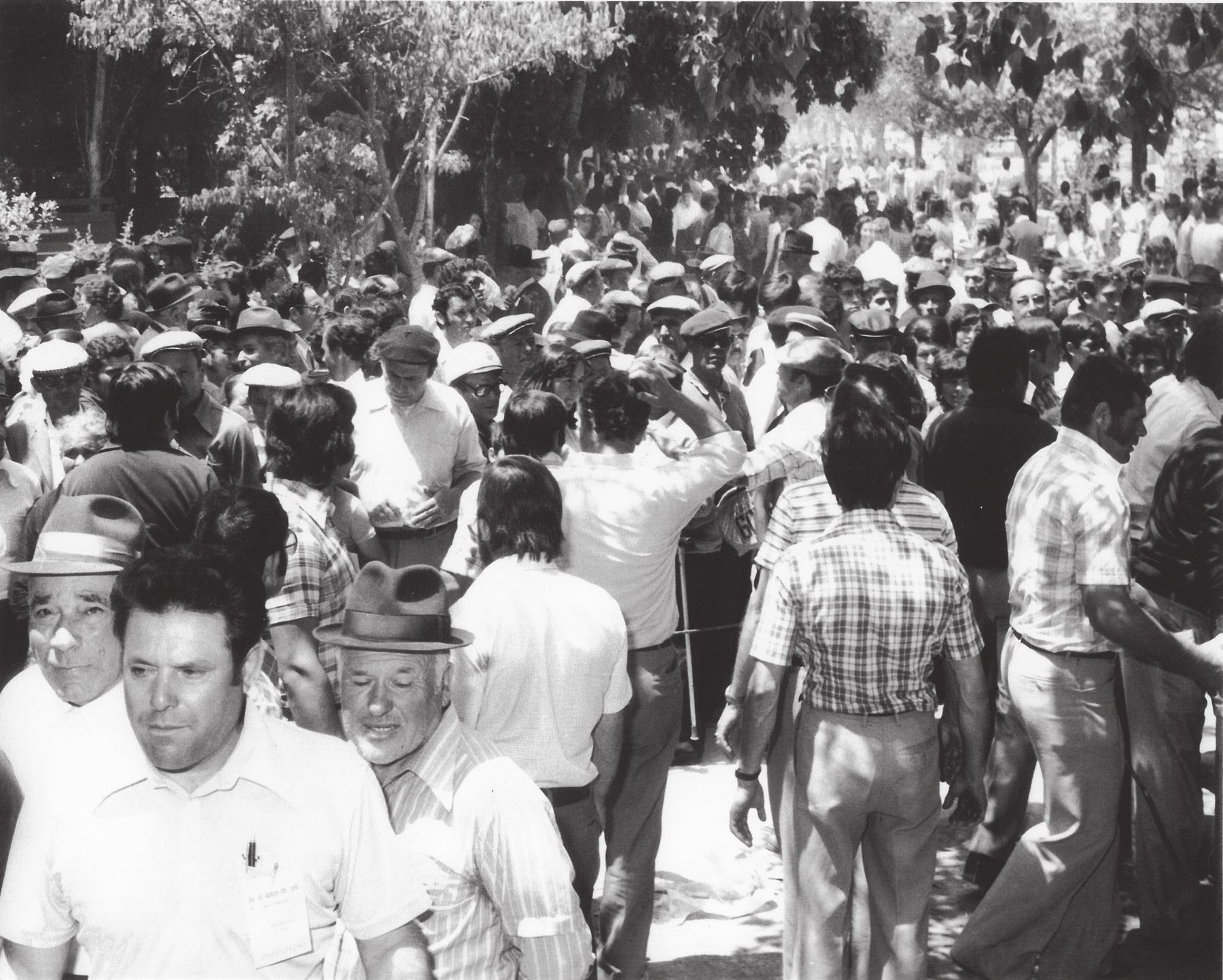
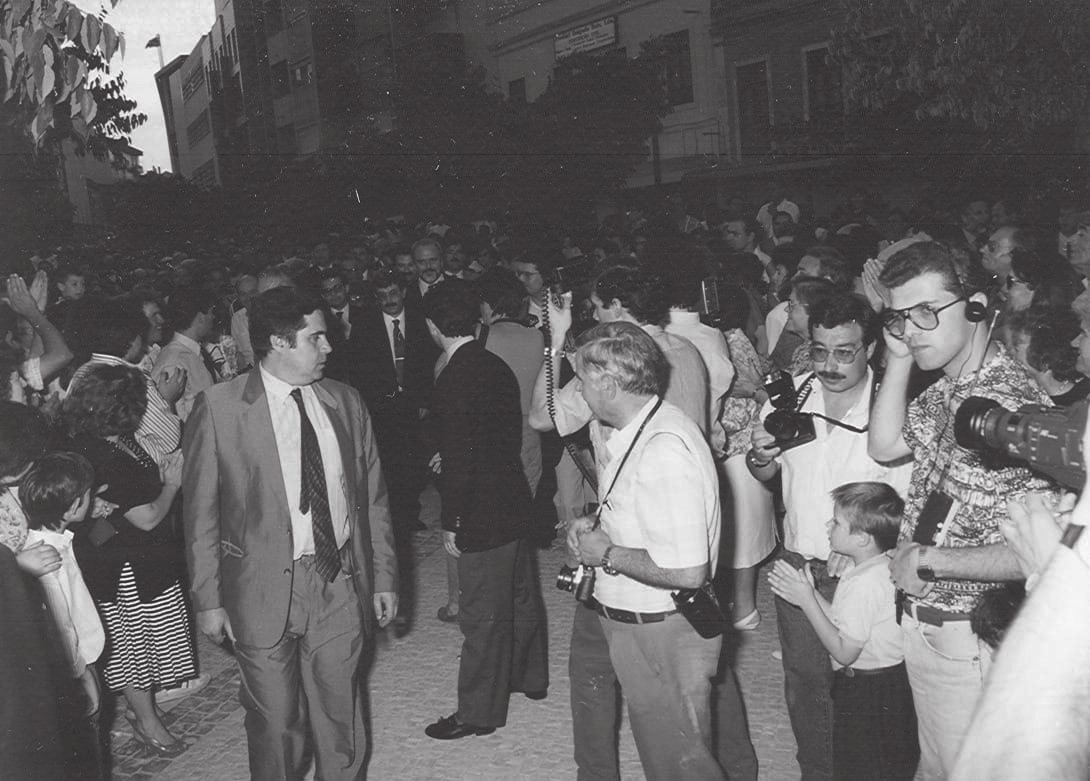
The Rio Maior club — a wooden club devised by “Abílio das Lenhas” — became associated with these events. Stripped of political meaning, it remains part of local craftwork.
Soldiers from Infantry Regiment No. 5 in Caldas da Rainha restored order. The following day, reports in the Lisbon press branded Rio Maior residents “troublemakers”. In response, local people intercepted and destroyed newspapers arriving from the capital in a boycott that lasted more than a week.
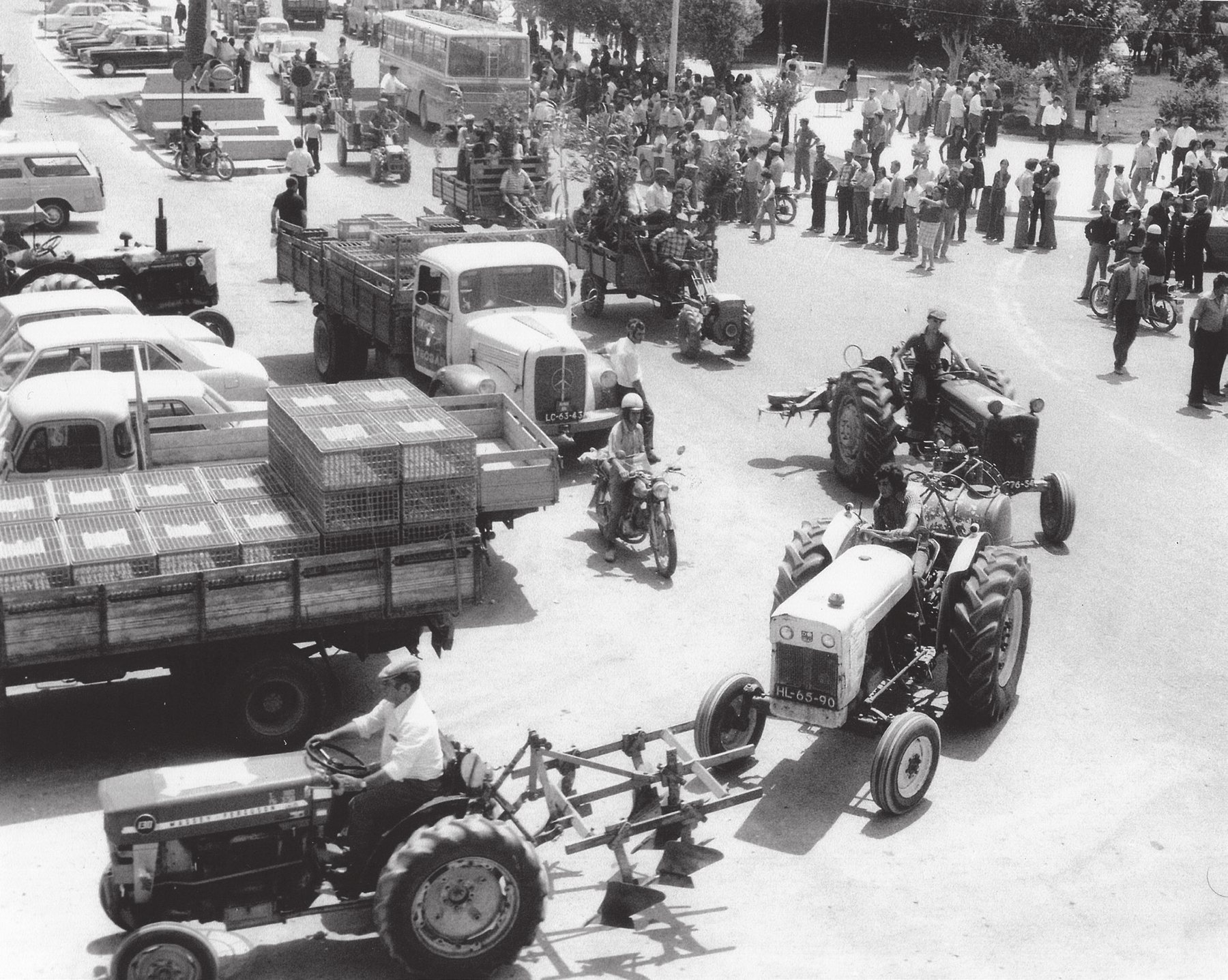
This mobilisation gave rise to the organisation that would become the Confederation of Portuguese Farmers (CAP). Farmers from across Portugal joined a four-month campaign of demonstrations and public meetings, culminating in the mass gathering of 24 November and the events of 25 November 1975.
Municipal holiday
From 1976 to 1985, Rio Maior's municipal holiday fell on 13 July and was known as “Free Farmer's Day”. Avenida 13 de Julho, linking the EN1 and EN114 roads, preserves the memory of the part these routes played in the region's history.
José Valério Colaço, then a young man involved in music, culture and local associations, photographed this “whirlwind of events” and left a visual record of the solidarity shown by residents, workers and landowners.
“13 July 1975 in Rio Maior will not die! Free farmers wrote this page of our history.”
The “Rio Maior club”
A popular name for the wooden clubs used during the confrontation on 13 July 1975. The object remains part of local craftwork without its former political meaning.
Remembering 25 November 1975
On the eve of 25 November 1975, Rio Maior provided a signal for moderate elements of the Armed Forces to act in defence of the freedom and democracy promised by the April Revolution. During the Hot Summer, the Alentejo and Ribatejo were under strong Communist Party influence, and agricultural organisations were being occupied across the country.
The Rio Maior Farmers' Association created a National Farmers' Secretariat (SNA), chaired by José Manuel Casqueiro. With the support of moderate military officers, it called a national demonstration in Rio Maior for 24 November. Joaquim Nazaré Gomes recalled that more than 50,000 farmers attended.
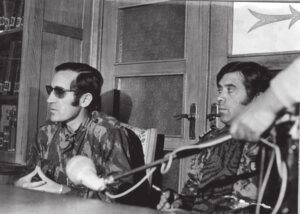
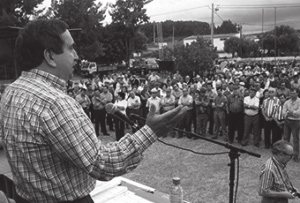
Testimony of Joaquim Nazaré Gomes · August 2026
"Colonel Jaime Neves and I shared a friendship. During the Hot Summer we often talked about the situation of the country. His intention, if things descended into civil war, was to bring his troops to the Serra dos Candeeiros, here in Rio Maior, and make a stand from here against the left-wing revolutionaries. He counted on the support of Rio Maior and everything north of it - and he used to say the revolution would never get past this point."
The gathering approved a thirteen-point list of demands and decided to block the Lisbon–Porto road, the road at Porto Alto, the Western railway line and several secondary routes in order to press the government to respond.
The night everything changed — Joaquim Nazaré Gomes's account
- —After the demonstration, two members of the Council of the Revolution asked José Casqueiro to send a delegation to Belém.
- —Casqueiro, Luís Madeira, Guilherme Jacinto and Joaquim da Nazaré Gomes left Rio Maior for Lisbon.
- 06:00The meeting ended with a promise that the government would consider the farmers' demands.
- —On leaving, they met Jaime Neves near Calçada da Ajuda, as the military operation of 25 November was beginning.
“Hours later I learnt that 25 November was already under way, when the freedom and democracy promised to us on 25 April 1974 were finally restored.”
CAP was born in Rio Maior
Rio Maior's mobilisation left a lasting organisational legacy: the creation of the Confederation of Portuguese Farmers (CAP). The National Farmers' Secretariat, based in the town, served as its embryo. CAP's statutes were approved at the demonstration on 24 November 1975, and its headquarters remained in Rio Maior until the Confederation moved to Lisbon in 1993.
José Manuel Casqueiro became CAP's first Secretary-General and co-founder Raúl Rosado Fernandes later became its President. APA Rio Maior became one of its core member associations, represented at the founding congresses by Adelino da Costa Bernardes.
Luís Mira, CAP Secretary-General
“On 13 July 1975 in Rio Maior, hundreds of farmers united to protect the Farmers' Guild. Their firm and courageous action became a symbol of the defence of farmers' rights and the dignity of Portuguese agriculture. The rising marked the beginning of a movement in defence of private property that was fundamental to stabilising Portugal's democratic process.”
In July 2025, CAP's national leadership marked the fiftieth anniversary of Free Farmer's Day in Rio Maior and recognised that the Confederation grew out of the free farmers' movement of July 1975.
A remarkable chapter in Portuguese history
Rio Maior's farmers played a remarkable part in Portugal's contemporary history. They defended their land and freedom against the dominant revolutionary power and helped bring about the political turn that returned the country to representative democracy.
13 July prepared the ground for 25 November in both motivation and methods. Local organisation, direct action, symbolic importance and the subsequent founding of CAP make Rio Maior a striking example of how a rural community can influence the course of a nation.
“13 July 1975 in Rio Maior will not die! Free farmers wrote this page of our history.”
The legacy of 1975 keeps Rio Maior among the symbolic places where the future of Portuguese democracy was decided.